Posts Tagged Philippines
Philippines going backwards toward colonialism, as talks ensue with Washington for a new military presence
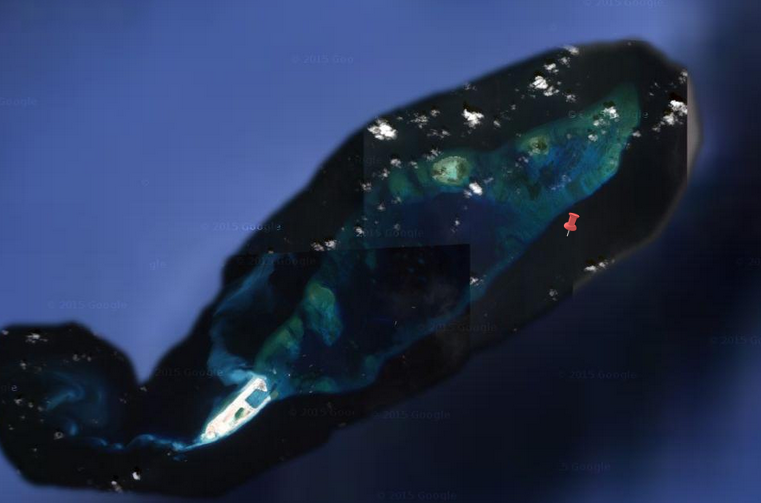
The talks are scheduled for this week, all fueled by the fear of China.
I guess it’s dawned on someone that the Philippines would be a convenient place to have U.S. military in Asia, just in case.
Could be a matter of “everything old is new again.” But the difference may be concerns over a more aggressive China.
The Philippines may want this justifiably for protection, but this is still a disappointment in the development of the country. Years after successfully kicking out the U.S. presence in Clark and Subic, it seems the Philippines has been unable to grow out of its colonial mentality.
Washington Post breaks the story:
Manny Pacquiao needs an exit strategy, so here’s one: The Manny come home, farewell fight and karaoke fest in the RP
His face was “bruised and plump.” He needed help to get on his feet. His fingers were swollen so badly he couldn’t sign autographs.
That was a Philippine newspaper reporter’s description of Manny Pacquiao, the day after he won.
You should have seen the loser.
Antonio Margarito was in the hospital, his face swollen with welts the size of Texas, his right eye shut and barely in place in his broken eye-socket bone.
This is why Manny Pacquiao needs to stop now.
On Saturday, the PPP (pound-per-pound) King of Boxing, won his 8th title in 8 weight divisions. What more is there to do?
He can wait for the winner of this weekend’s Martinez/Williams fight and go after the middleweight crown. Hey, 9 titles in 9 weight classes! But then why not 10, or 12?
That’s the problem. Manny is so good, it’s not a fair fight unless he handicaps himself so severely. Like a thoroughbred forced to carry more weight, Manny has to do something that’s not as obvious as tying his left hand behind his back. It’s necessary because he is so good he would destroy others his size or smaller. The only challenge is to keep fighting what I call “up-hill.” Fight bigger,stronger, but not necessarily better boxers.
Margarito was 17 pounds heavier and 5-6 inches taller than Pacquiao. That’s not Mount Everest, but even Pacquiao admitted after the fight that Margarito had enough mass to absorb all of the Pacman’s punches.
Fighting bigger guys means knockouts will be fewer, fights will be longer, and the war of attrition will ultimately prevail.
Pacquiao’s speed enabled him to punch Margarito 411 times. The battering should have been obvious to the referee and to Margarito’s trainer who let the punishment go on.
And since this is boxing, Pacquiao got his share, 135 punches came from the stronger Margarito.
Punches start adding up and take their toll. Inside and outside the ring.
By stopping now, the Pacman saves his energies for his day job in the Philippine Congress, and his real passion in life—leadership.
Notice I said leadership, which is not politics, necessarily. Yes, congress is all about politics, but Manny’s gift goes beyond that. He’s got the most important trait for a leader: Charisma. People follow and listen. This is something that can be developed, hopefully, for positive purposes. But it is Manny’s true gift. His fists may have brought him fame, but his real gift is public service.
Like Obama did in 2008, there’s something about Pacquiao that inspires hope.
Perhaps it’s the back story that creates the foundation for a mythic life. The hardscrabble upbringing, the tale of a street kid who turns to boxing to help feed his family. Boxing discovered and nurtured him to the point where he is the most intriguing fighter in the sport.
So why stop there?
Because there’s life after boxing, and to preserve it, there’s no better way than to end his pugilistic phase at the top.
Pacquiao has established his boxing legacy firmly. His championship track is like watching one of those charts of the evolution of man. Eight weight classes? The only one who could repeat what he’s done is another flyweight with the same expansive heart and spirit. And that’s not likely to happen—ever.
Margarito wasn’t even the best challenger. But he was bigger, by a lot. And if there were any doubters left about Pacquiao, seeing the champ destroy a bigger man was enough to etch the legend in stone.
But boxing is as much about greed as it is about legacy. Manny’s problem here is coming up with a suitable exit strategy for all.
People keep mentioning Floyd Mayweather, as if that’s the ultimate. It is not. But how do you top that match up?
A Pacquiao farewell in the Philippines.
One big blowout. The “Thrilla In Manila” with a real Filipino champ eight times over, and it doesn’t matter anymore if it’s a lesser fighter. It’s the last-pay-day. The Finale. People would pay to see a finale. Train for real in Baguio, then take a week to travel and train in different parts of the country, ending in one big blow out in the big city.
Think of what it would do for tourism. And balikbayans would go for balikboxing.
It’s the “Manny go home, farewell tour and karaoke.” The Datu goes out on top.
All you have to see is an image of an addled Muhammad Ali in a wheelchair to know it’s the right thing to
With “Partial Martial,” Philippines President Arroyo secures her legacy as “Marcos Lite”
Posted by Amok in blog, journalism, news on December 7th, 2009
President Arroyo has finally secured her legacy as “Marcos Lite.”
That’s my name for the president who has managed to keep the corruption levels and human rights violations during her administration under a level to cause absolute world-wide indignation.
She’s President Obama’s buddy, right.
But now Arroyo has unequivocally earned her sobriquet by using the already horrific Maguindanao mass murders to justify martial law, a straight steal from the Marcos playbook.
For one second, perhaps we can let cooler heads prevail. Is it really all that bad? It’s not full martial law. Just in Maguindanao.
Call it “Partial Martial.”
Of course, there’s no such thing as being a little bit pregnant either.
But let’s give the president the benefit of the doubt.
The power move shows Arroyo certainly isn’t going gently into her good night. I thought P.M. was supposed to stand for “prime minister,” reportedly the next coveted position Madame Arroyo was concocting for future occupancy. That would require some changes in the Philippine democracy itself, but it seems that with this “p.m.” Arroyo’s already applying some aggressive constitutional interpretation.
She’s even using the same rule that Marcos used to invoke full-on martial law.
But as Pacifico Agabin, a former dean of the University of the Philippines College of Law, told Inquirer reporters, Arroyo’s declaration is unwarranted and unnecessary as the government has shown control of the situation in Maguindanao with the arrests of the Ampatuans.
“The only grounds for the declaration of martial law are invasion and rebellion. I don’t think the Ampatuans are capable of launching a rebellion against the government,” he told the Inquirer.
He added that the constitution requires “actual rebellion,” not merely a threat.
There was already a change in the law in 1987, so that a repeat of Marcos could not be possible without a real threat to the government.
The U.S. Constitution, from which the Philippine Constitution has a “martial law” clause. But who in his right mind would declare it in a democracy without a real threat to the government.
Certainly a president can issue a “state of emergency” if need be. But to go right to martial law?
In this case, Arroyo has taken off her soiled velvet gloves and revealed her iron fist.
Did she really think it would be as becoming with her red dress?
There’s no reason for partial martial, period. A massacre, as bad as it is, isn’t a rebellion.
So what’s the purpose, of p.m.?
Well, p.r.
Arroyo likely feels the only way to distance her administration from her former allies the Ampatuans is to come down hard on on all of Maguindanao. With partial martial, she creates the illusion of zero tolerance, whereas all along she has actually empowered the Ampatuans to do as they wish.
She also tests her power. Partial martial let’s her feel the wheel of absolute control in a portion of the archipelago, and let’s her consider an option. Could she go all the way in a transgression of the constitution to extend her presidency for “the good of the country”?
Legislators and the people must speak out now. Marcos Lite? “Partial Martial” is a clear sign of a second coming.
In death, Corazon Aquino becomes spirit of Philippine democracy
I’ll always see Cory Aquino as the demure amateur thrust into the limelight.
I first saw her in 1983 in the Santo Domingo Church in the Philippines. I was there for KRON-TV/ San Francisco doing a story for the NBC network. I was covering the funeral of Aquino’s late husband the charismatic Benigno “Ninoy” Aquino, the former journalist and Philippine Senator who was considered the main foe of Philippine autocrat Ferdinand Marcos.
Cory Aquino wore a black, not yellow dress, as she took to the vestibule in mourning and asked the entire country to “not let Ninoy die in vain.”
She then led a crowd of at more than a million people through the streets of Manila in what was a magnificent funeral procession and a harbinger of the “People Power” revolution that would take place within three years.
Cory Aquino didn’t do half bad, really, as political wives go.
The feelings for Benigno Aquino and the negative feelings for Marcos were so strong, that the momentum was set up for anyone who dared to stand in the spotlight.
Cory Aquino was it by default.
She had enough in her to inspire the millions ready for change to boldly stand with her in 1986 against the dictator. This was the peaceful revolution known as People Power. The assassination, the distraught situation of the Philippine people, and the unwillingness of the country to accept a fraudulent Marcos election bestowed on Aquino a kind of sainthood. Cory was the Philippines patron saint of democracy.
That was Cory Aquino’s ideal role. She was perfect at that.
But as president, she was a bit lacking.
In interviews, she admitted she had no real idea what she was doing. The devout Catholic had her sincerity, her earnestness. But we learned that public policy is not built on prayer alone. Aquino did manage to survive and keep things together, no small task considering that by the time she left office in 1992, she had survived six coup attempts.
The real disappointment of her reign, however, was not that Cory couldn’t do it, but that the Filipino people who thrust her into power couldn’t do it. With Marcos gone, the deck was merely reshuffled among the governing class. The Ins were Outs. The Outs were In. Net change: Zero.
Exiled leaders came home to their lost fortunes. Former leaders came to America, or accepted lesser posts. The poor did not/could not rise. The country’s collective fate did not improve.
Unfortunately, it’s still debatable if the Philippines is better off now than it was under Marcos.
Since Aquino left office, the Philippines has been reliving watered down versions of its past. Corruption is dialed back, but not eliminated. A bad president (Estrada) is thrown out by “mini-people power,” and is replaced by another oligarch, Gloria Macapagal Arroyo.
Arroyo, who was with President Obama this past week, is the anti-Cory in every way. Cory wore yellow. Arroyo wore red.
It’s safe to say Arroyo is no Cory Aquino.
I’ve called Arroyo Marcos Lite. All the taste of the former dictator, but with fewer calories.
Even Cory Aquino marched in protests that called for Arroyo’s resignation.
Ironically, Cory Aquino’s death may actually make her an even more powerful force in such a devoutly Catholic country.
Death should only solidify Aquino’s role as the spirit of a democratic ideal for the Philippines.